





The weather is getting extreme
In the 70’s and 80’s, we were still able to enjoy four clearly defined seasons every year. In recent decades, however, the weather has changed significantly not only in Germany but also around the world. This also raises the question of whether the four seasons actually still exist. The weather and its associated effects have definitely become more extreme, at least it feels that way.
Building boom with side effects leads to the land becoming sealed
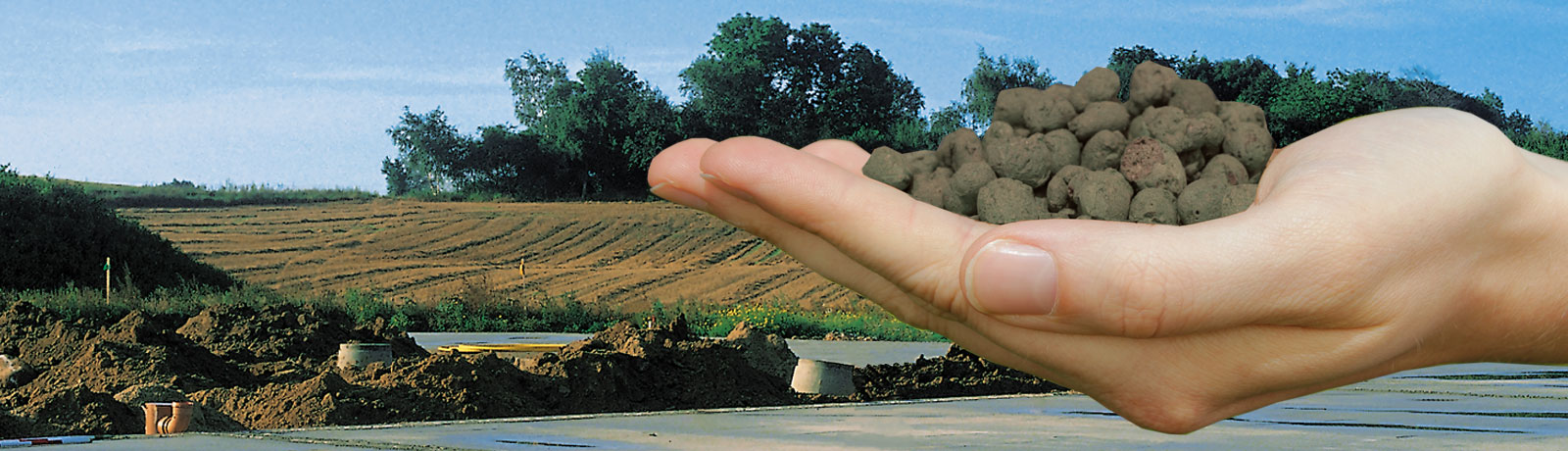
The building boom we have been experiencing for the past 30 years alone has resulted in more and more green spaces being designated as building land and, as a consequence, are built on. As a result of the urgent demand for new housing, however, this meant that huge areas were simultaneously sealed with roads, footpaths and cycle paths, car parks, shopping arcades and many other buildings. This is referred to as surface or soil sealing.
The consequences of large-scale soil sealing become particularly visible during persistent and heavy rain. In contrast to a green area, where all the rainfall is absorbed and can then trickle through into the groundwater, in a sealed area such as a road, the rainwater simply runs off into the sewer system.
As this rainwater is largely clean, the accumulated water is collected in pipe systems and underground canals made of stones and concrete and discharged directly into the nearby streams and rivers. This means that seepage directly into the soil is only possible to a very limited extent, if at all. As a result, considerable water masses collect together, which can cause considerable damage. Unfortunately, there are plenty of recent examples of this and sorting all the fallout from the damage can sometimes even take years.
Homeowners have several options on how to make use of their property
Everyone who owns property can help within their means to reduce the burden on the environment and invest in the future for themselves. With a solar panel system, light energy can be converted into electrical energy and stored using solar cells. A greened flat roof provides a good microclimate and the rainwater that falls can be collected in a rainwater cistern and reused for watering the garden, for example.
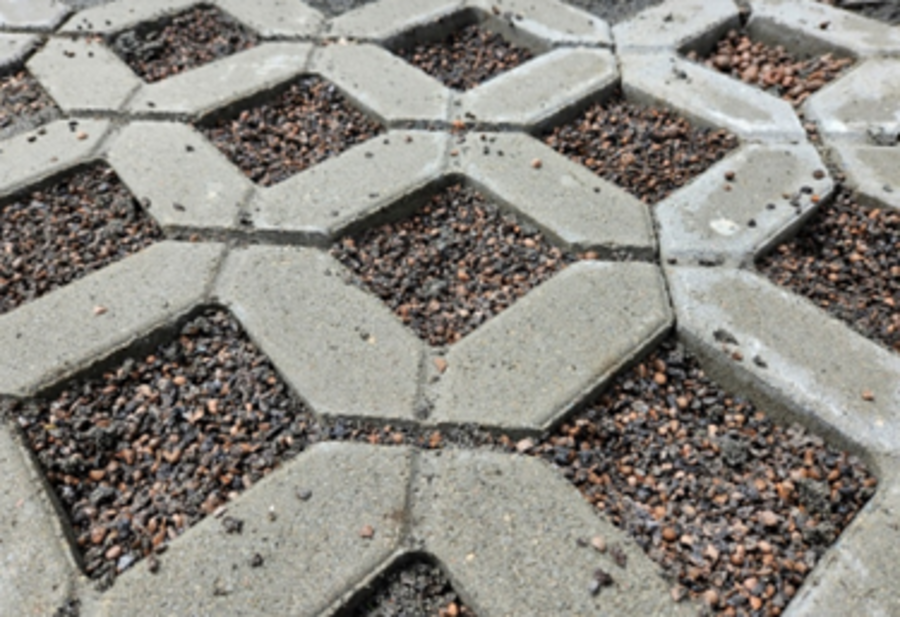
There are also down-to-earth solutions for outdoor areas. The open spaces made up of driveways and car parks can be paved, for example, with so-called grass pavers, which are available in various designs, and the existing spaces filled with CN expanded clay. The rainwater that accumulates can then seep directly into the ground through the filled gaps. If prepared correctly, the rainwater can even be collected in a cistern.
Healthy environmental awareness starts on your own doorstep
There are measures you can take at home that make sense but unfortunately also involve significant sums of money at the same time. Then again, there are the projects that could be made up of several modules, as it were, so could be implemented individually or as a whole.
Water is a precious commodity for us all and, when used sensibly, keeps many things alive. Our water resources are worth protecting and protection starts on our own doorstep – it can also help you save money. Once you have decided to purchase a cistern, for example, the next step is to implement it correctly and professionally.
In our example, the owner has chosen to use her parking area so that the rainwater that falls is drained directly into a cistern. The grass pavers have been laid on a special filter fleece on a base which had been prepared by a GaLaBau specialist company. The gaps were then filled with CN Construct expanded clay with a grain size of 4 - 10 mm.
The precipitation, i.e., the rain, passes through the expanded clay where it is already pre-filtered from the fine dusts, such as dust and pollen. The water visibly seeps away and passes through the fleece under the expanded clay. The clean rainwater is then fed into a cistern and stored there until it is needed.
Relieving the sewer system
It is of course true that just one measure is not enough to take the pressure off our sewage systems. Not even today, however political guidelines and implementation of measures at regional and national level could make a measurable difference in new development areas.
Our tip:
Talk to someone like a GaLaBau company that you trust to discover all the steps necessary to collect all the rainwater falling on your property. You can reduce your utility water costs in future by using every cubic metre of water collected. Many people already collect rainwater from the roofs of their garden buildings and sheds.