




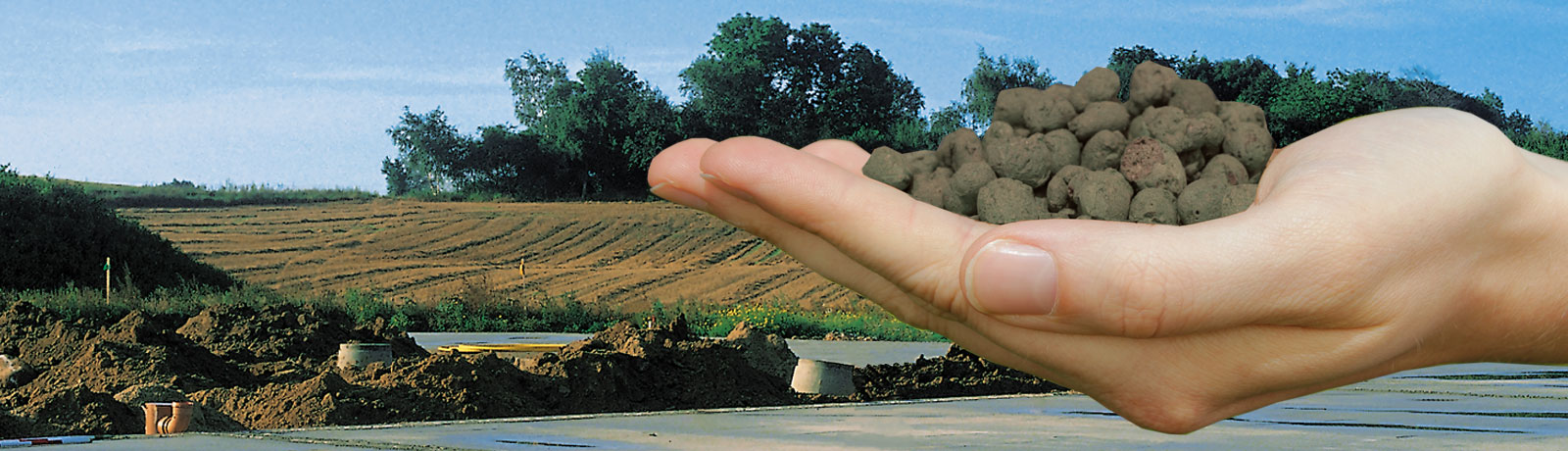
When CN Construct expanded clay is used, the health effects of radon in buildings can be reduced or even prevented.
Radon is a naturally occurring and radioactive noble gas which can cause lung cancer. As early as 1980, radon was classified as carcinogenic by the World Health Organisation (WHO). The European Union also reacted to protect its citizens from excessive radon concentrations in buildings in the form of a guideline. Then a corresponding Radiation Protection Ordinance also came into effect in Germany in early February 2018. With approx. 2,000 cases per year, radon is the most common cause of lung cancer among non-smokers in Germany.
CN Construct expanded clay serves not only to protect buildings but also to protect the people within them from the health effects of radon.
Radon forms in the ground and can arise anywhere in the world. The evaporating radon concentration varies from location to another. On account of its radioactivity, radon is harmful to health and cannot be perceived by the human senses as it is odourless, colourless and tasteless. These properties make radon even more dangerous for human beings.
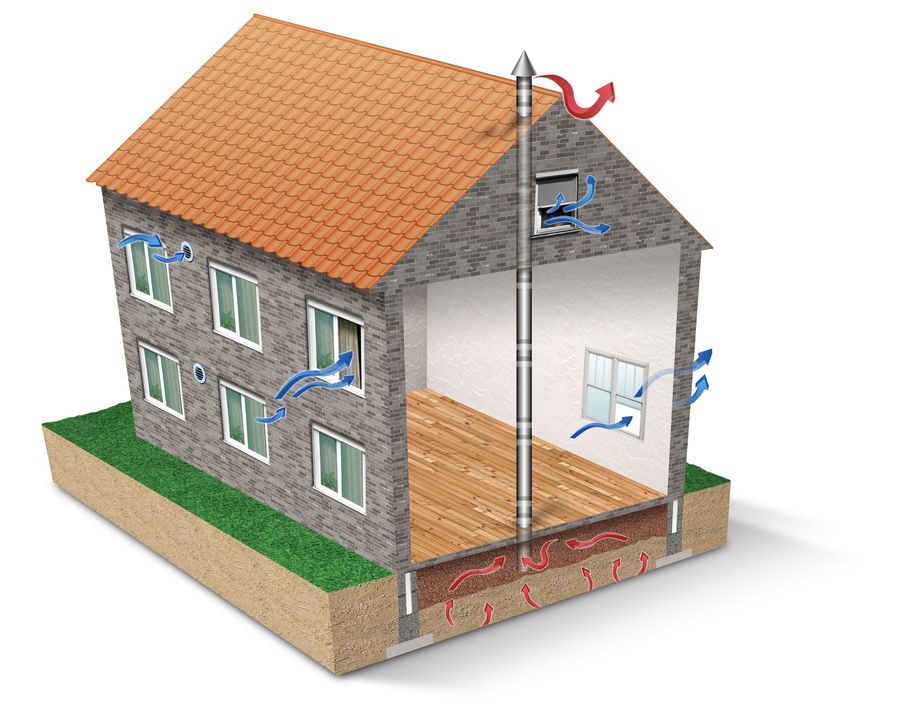
It is effectively harmless for people outdoors as it swiftly mixes with air so that the concentration is very quickly reduced. If, however, a building is located on top of a point of escape, this noble gas can easily penetrate the building, e.g. through cracks, fissures and joins primarily in the foundations but also through basement and building walls. The concentration initially increases in the respective rooms before spreading throughout the building. Indoor air is steadily contaminated during this process. Radon is therefore a risk which needs to be eliminated and the current state of the art makes this possible. Radon concentration is measured in Becquerel per cubic metre, Bq/m3. The current Radiation Protection Ordinance in Germany provides that a value of 300 Becquerel per cubic metre indoor air may not be exceeded in buildings, while achieving a value lower than 100 Becquerel per cubic metre would be desirable.
In new buildings, CN Construct expanded clay can already be integrated as a preventive measure (layer thickness approx. 50 to 60 cm) in order to prevent radon from penetrating the building from the very start. It goes without saying that existing buildings can also be upgraded and/or refurbished using various options. CN Consulting + Baustoff-VertriebsgesellschaftmbH offers treated expanded clay with a grain size of 10 to 20 mm for both variants. Architects and building owners alike are convinced by CN Construct expanded clay and its multiple benefits: as an insulating layer, it also helps to save energy costs and as a reliable drainage layer, it offers protection as well as draining away excess moisture.